FROM THE EDITORS
Imagine waking up to find that the most powerful artificial intelligence model in the world has suddenly been wiped from your region. No warning, no gradual phase-out—just an immediate, global blackout.
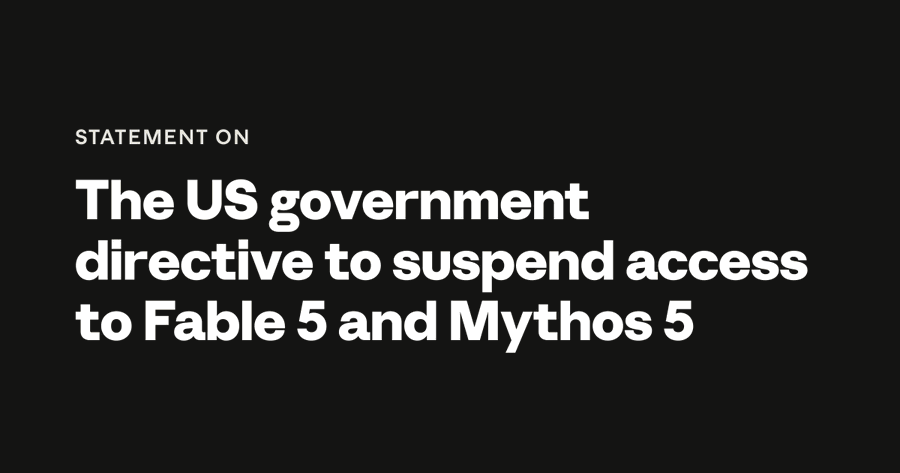
That is exactly what happened when the US government issued an emergency export control directive forcing AI pioneer Anthropic to abruptly suspend global access to its cutting-edge frontier models, Fable 5 and Mythos 5. The order barred access for any foreign national, inside or outside the US.
This sudden move brings a brewing geopolitical reality into sharp focus: The US and China are locked in a fierce AI arms race, and the rest of the world—including the EU—is at risk of being locked out.
The Catalysts: Why the Walls Are Going Up
The abrupt shutdown of Anthropic’s flagship models highlights a massive shift in how supercomputing power is viewed by superpowers. It’s no longer just commercial tech; it’s a matter of national security.
- The “Jailbreak” Panic: The US government’s sudden intervention stemmed from fears over a narrow, non-universal “jailbreak” (a method to bypass a model’s safety guardrails). While Anthropic argued the vulnerability was minor and common across the industry, Washington preferred a total global recall over risking advanced software-fixing capabilities falling into foreign hands.
- Aggressive Export Controls: This isn’t an isolated incident. The Trump administration has increasingly tightened the screws on foreign access to advanced AI. A recent executive order even mandates that major AI firms submit their frontier models for government cybersecurity testing before public release.
- The Chinese Fortress: On the other side of the Pacific, China operates behind its own massive digital infrastructure. Leading tech giants like Baidu, Tencent, and Alibaba build powerful models heavily regulated by Beijing. These models are tightly aligned with state interests and are rarely exported with open, unrestricted access to Western markets.
Caught in the Crossfire: The EU’s Dilemma
Where does this leave regions like the European Union?
While the EU boasts some of the world’s most comprehensive tech regulations (like the EU AI Act), it heavily relies on American infrastructure and silicon to run frontier-class AI. When the US government decides to pull the plug over domestic security concerns, European businesses, developers, and researchers are left out in the cold.
If the US continues to treat commercial AI deployments with strict export controls, the EU faces a stark reality:
- A “Tech Chasm”: European industries could find themselves locked out of the most capable models, forced to use older, less powerful iterations while US and Chinese firms sprint ahead.
- The Sovereignty Scramble: The EU will be forced to aggressively fund and develop its own domestic “sovereign AI” ecosystem (championed by companies like Mistral AI) to avoid total dependence on foreign political whims.
The Future of Frontier AI
Anthropic warned that if the standard used to ban Fable 5 is applied across the entire industry, it will “essentially halt all new model deployments for all frontier model providers.”
We are transitioning out of the era of global, open-access tech and entering an era of “AI Nationalism.” If the US and China continue to treat advanced neural networks like digital nuclear secrets, the global tech landscape will fracture. The best AI tools might no longer go to the highest bidder—they will stay strictly within the borders of the countries that built them.
Leave a Reply