Yesterday we argued you can’t buy your way out of the Apple–Google brain. It turns out there’s exactly one way: live in the EU. The catch is that you don’t get a freer phone — you get a lesser one. And 450 million people just became the world’s control group in an experiment none of them agreed to run.
FROM THE SIGNAL DIGITAL EDITORS · OPINION · JUNE 2026
Yesterday we made a simple, uncomfortable argument: the new Siri runs on a brain Apple built in “deep collaboration” with Google, and on neither major phone platform can you opt out of it. Two phones, one mind, and it answers to Mountain View.
Within twenty-four hours, the universe produced a counter-example. There is a place where Google’s brain will not reach your iPhone. It’s called the European Union. And the way Europeans get to escape the one mind is that they don’t get a mind at all.
This is not the victory it sounds like. Read on.
What actually happened
At WWDC, and in a press release the same day, Apple confirmed that Siri AI — the entire Apple Intelligence-powered overhaul — will not ship in the EU (or China) when iOS 27 and iPadOS 27 arrive later this year. Because the new Apple Watch software depends on a paired iPhone running Siri AI, watchOS loses the features too. Apple’s stated reason is the Digital Markets Act.
Apple’s version, delivered by software chief Craig Federighi with practised regret, is that it’s “deeply disappointed” its EU users won’t get the features, and that EU regulators rejected every solution it proposed over months of talks — including a privacy-preserving intermediary it calls a “Trusted System Agent” and an 18-month phased rollout. Apple’s marketing chief Greg Joswiak went further in briefings, calling it the most extreme interpretation of the DMA the Commission has produced to date.
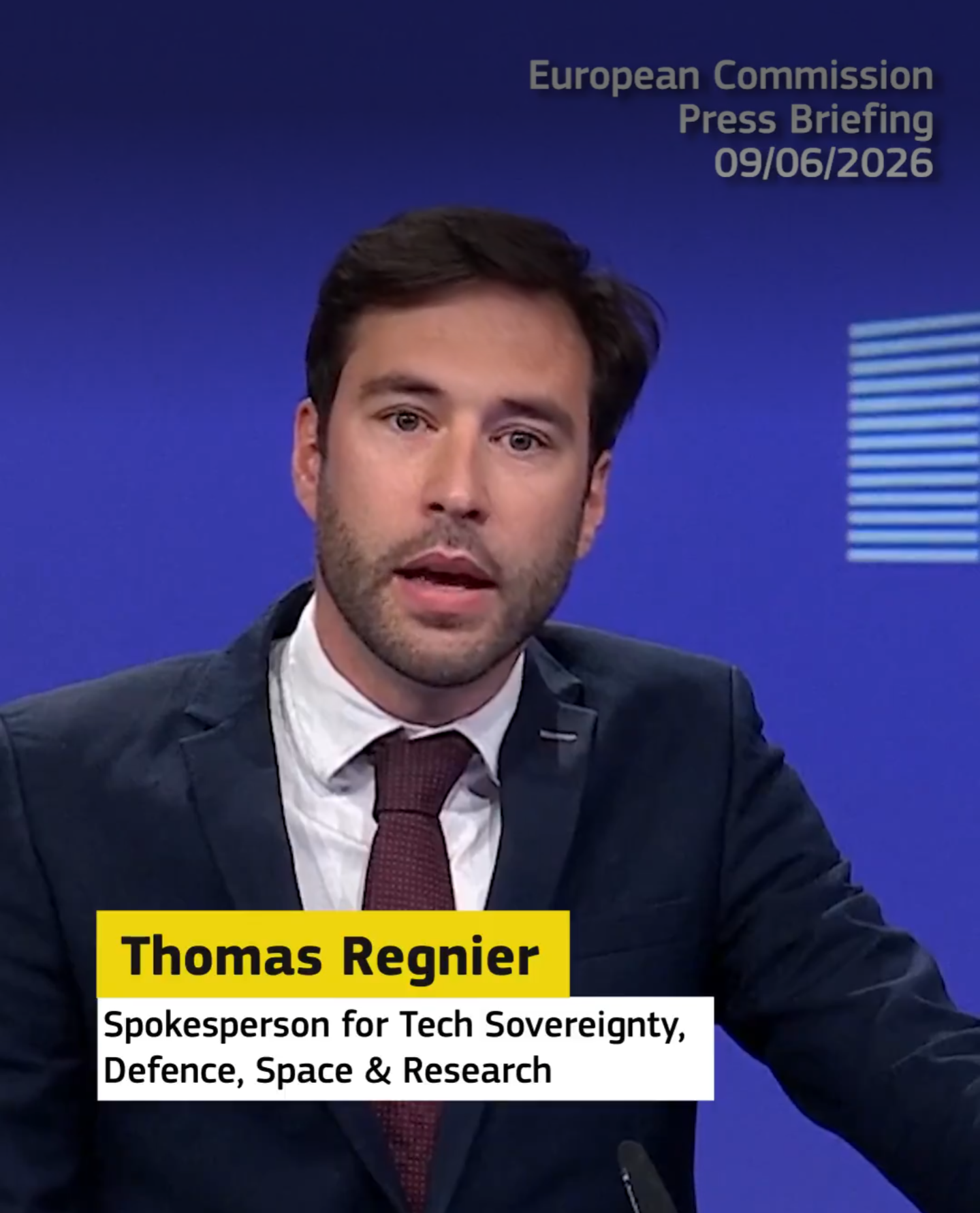
Brussels was not in a mood to absorb the blame. Commission spokesperson Thomas Regnier told reporters the decision is “Apple’s and Apple’s only” — that Apple simply couldn’t build interoperability that met EU privacy and security standards, and instead asked to be exempted from its legal obligations entirely, which, he noted, is not on offer.
So here is the scene: two of the most sophisticated institutions on earth, each pointing at the other, each insisting the dumber phone is the other one’s fault.
The control group nobody volunteered for
Strip away the press-release language and look at what was actually decided. This autumn, on the order of 450 million Europeans will install the newest version of the software on the phone in their pocket and receive a product measurably less capable than the one handed to a teenager in Ohio or Jakarta or São Paulo on the same day.
Not because of a bug. By design. As a negotiating position.
The honest framing of this came not from Apple and not from the Commission, but from a bystander — Alexandru Voica, a self-described Android loyalist with no love for Apple, who said the part everyone with a stake was too conflicted to say. Most people, he conceded, won’t much notice that their phone got a little less capable. But absences compound. Over years, a continent that consistently receives technology a beat behind everyone else doesn’t just have worse gadgets — it lives differently, and its economy can do less. And in a moment of genuinely rapid advance at the frontier, missed beats compound fast.
That’s the real cost, and it is exactly the cost both sides are incentivised to wave away. Apple files it under the EU did this to you. The Commission files it under, in Voica’s pointed phrase, someone else’s problem. Nobody whose name is on the decision has to carry it.
Apple’s privacy halo has a twenty-four-hour problem
Here is where it gets delicious, and where yesterday’s story collides with today’s.
Apple’s entire EU defense is privacy and security. The DMA, it argues, would force it to give rival AI systems “nearly unlimited access” to your device — the ability to read your messages, make purchases, move through your files, act on your behalf without your ongoing oversight. That is a real risk, and Apple is not inventing the threat; security researchers have shown AI agents can be hijacked. Withholding Siri AI is, in Apple’s telling, an act of protection.
Now hold that next to what Apple said on the very same stage yesterday. Privacy in AI, Federighi told the world, is “non-negotiable.” And yet — by the reporting of Bloomberg’s Mark Gurman and The Information — the brain behind that same Siri was built with Google and may run, at least in part, on Google’s own cloud.
So within a single keynote, Apple is both the company that handed its AI mind to the planet’s largest data broker for a reported billion dollars a year, and the company posing as the last line of defense for European privacy against Brussels. It will open its system to Google for money. It will not open it to EU-mandated rivals for principle. Both of those can be defensible on their own terms. Standing on the same stage, on the same day, they are something closer to a tell.
Brussels isn’t wrong. It’s just looking away.
And yet — this is the part a daring piece has to be brave enough to include — the Commission is not the cartoon villain Apple’s PR needs it to be.
The DMA’s core idea is not frivolous. A dominant gatekeeper that controls the most valuable real estate in computing should not get to decide that its own assistant gets deep system access while everyone else’s is locked out of the same hooks. That is the entire point of interoperability law, and Apple has a long, documented habit of “malicious compliance” — complying with the letter of EU rules in the most user-hostile way available, then blaming the rules. “Privacy” has been Apple’s reach-for shield in fights that were really about money before. Regnier’s skepticism is earned.
The Commission’s failure is narrower, and it’s the one Voica named. It is the refusal to say, out loud and in public, yes, this carries a real cost to real Europeans, and we have weighed it and decided the long-term principle is worth the short-term loss. That is a defensible sentence. “Apple’s and Apple’s only” is not that sentence. It’s a sentence designed to make sure that when 450 million phones come up a little short this autumn, the fingerprints belong to Cupertino. It’s a press strategy wearing the costume of a principle.
There is no third door
Step back and the two stories — yesterday’s and today’s — turn out to be the same story, photographed from opposite sides of an ocean.
Everywhere outside Europe, the price of having a brilliant assistant in your pocket is that it isn’t yours; it’s Google’s, wearing an Apple badge. Inside Europe, the price of not having your mind outsourced to Mountain View is that you don’t get the assistant at all. One side gets capability without sovereignty. The other gets sovereignty without capability.
What nobody is offering — not the duopoly, not the regulator — is the third door: a powerful, genuinely useful assistant that actually belongs to the person using it. The American settlement forecloses it from one direction by making the brain Google’s. The European settlement forecloses it from the other by making the brain absent. Between them, two of the most powerful forces in technology and law have quietly agreed that the one option a normal person might actually want is the one option that isn’t on the menu.
That’s the scandal hiding under the blame-volleyball. Not that Apple caved to Google. Not that Brussels held the line. But that after all of it — the billions, the antitrust rulings, the press briefings, the sovereignty rhetoric — the European in the airport lounge and the American beside her are choosing between the same two bad deals, and being told by very serious people that this is what winning looks like.
Two phones, one mind. Except in Europe, where there’s no mind at all — and they’re calling that freedom.
Leave a Reply